
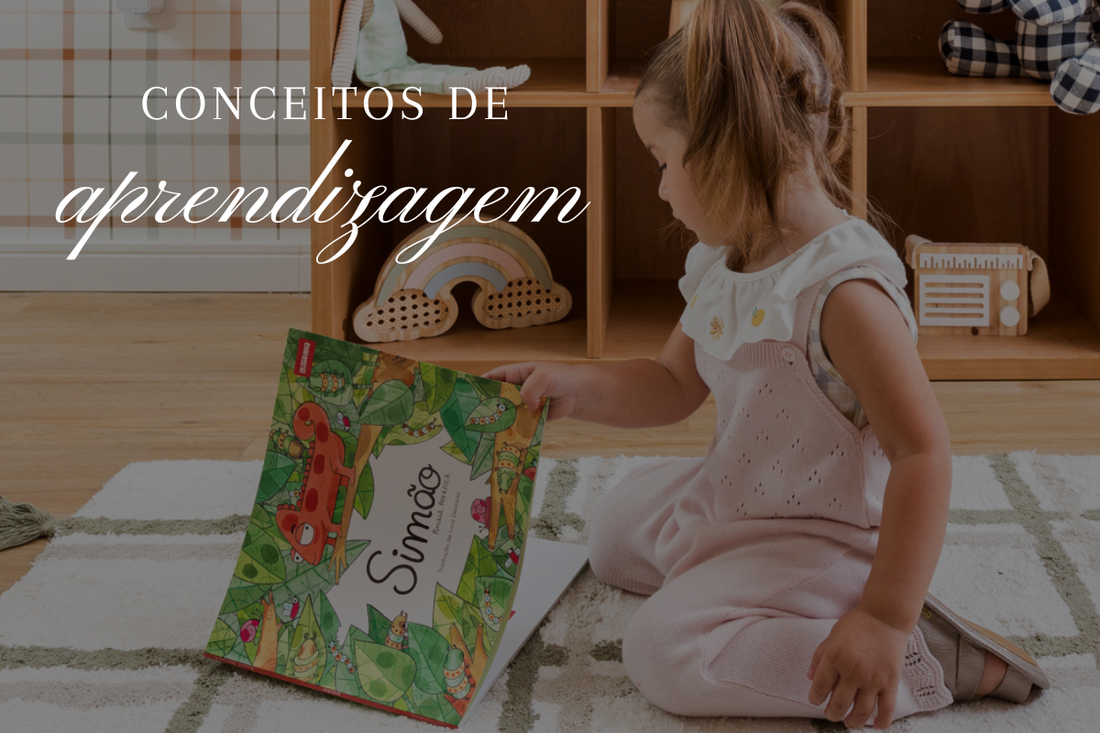
What do Piaget, Montessori, and Reggio Emilia teach us about childhood?
Childhood is a period of profound discoveries, where every stimulus is an opportunity for cognitive, emotional, and motor development. Over the decades, various scholars and educators have contributed theories that help us understand how children learn and grow more authentically.
Among the most influential are Jean Piaget, Maria Montessori, and Loris Malaguzzi, creator of the Reggio Emilia approach. Each brought a unique vision to child development, and upon closer inspection, we realize how complementary these methods are.
In this content, we will guide you through these three paths and show how Afetto helps make this journey lighter, safer, and full of meaning. Shall we begin?
Jean Piaget: intelligence is born from action
Jean Piaget, a Swiss biologist and psychologist, dedicated his life to understanding how children construct knowledge. For him, cognitive development occurs in stages and is directly linked to interaction with the environment. Piaget believed that knowledge is not something transmitted, but actively constructed.
Piaget's four stages of cognitive development:
- Sensorimotor (0 to 2 years): The baby learns through senses and object manipulation. This is when the concept of object permanence emerges (knowing that something continues to exist even when not visible). Example: A baby hiding and finding a toy under a cushion.
- Preoperational (2 to 7 years): The child develops language, imagination, and symbolic thought, but still cannot perform complex logical operations. Example: Playing make-believe with dolls, houses, or invented scenarios.
- Concrete Operational (7 to 11 years): The child begins to think more logically and concretely, solving practical problems and understanding relationships like cause and effect. Example: Assembling puzzles, understanding game rules, and performing sequential tasks.
- Formal Operational (from 12 years onwards): Abstract thought, ability to formulate hypotheses, and reflect on broader concepts such as justice or identity.
For Piaget, error was an essential part of learning — it is by making mistakes, trying, and comparing that the child reorganizes their thinking and constructs new knowledge.
Maria Montessori: freedom with responsibility
Maria Montessori was an Italian physician and educator who revolutionized how we view children. Her method is centered on autonomy, freedom within limits, and preparing the environment for the child to act as the protagonist of their development.
Montessori believed that the child possesses an absorbent mind, especially in the first six years of life, and that learning is most effective when it stems from the child's interest.
Principles of the Montessori method:
- Prepared environment: Everything should be within the child's reach, organized, functional, and aesthetically pleasing.
- Authentic and educational materials: Toys and objects with purpose, allowing for self-correction and the development of specific skills.
- Autonomy: Allowing the child to do independently what is within their reach — such as choosing clothes, serving their own food, or putting away toys.
- Observation and respect for the child's rhythm: The adult acts as a guide, not as the center of the process.
Example: In a Montessori room, the bed is low so the child can get in and out without help, books are on accessible shelves, and toys are organized by category and in reduced quantity to encourage focus and conscious choice.
Reggio Emilia: the child as a creative and collective subject
The Reggio Emilia approach originated in Italy after World War II, conceived by Loris Malaguzzi. Unlike a closed method, Reggio is an educational philosophy based on listening, art, and group work.
Here, the child is seen as potent, a creator of culture, and capable of constructing knowledge through relationships with others and the environment.
Characteristics of the Reggio Emilia approach:
- Child's protagonism: The child is listened to, respected, and encouraged to explore different languages to express their ideas (the “hundred languages of children”).
- Documentation of the process: Instead of focusing only on the final result, Reggio values the creative process with visual and textual records of what children produce.
- Inspiring environments: The classroom is called the “third educator,” along with adults and peers. It should be beautiful, welcoming, mutable, and full of natural stimuli.
- Investigative projects: Themes arise from children's interests and are investigated in groups, with mediation from educators.
Practical example:
In a Reggio-inspired environment, children can explore clay, paint, leaves, everyday objects, and even light and shadow to express an idea about nature. They work in groups, experiment, and verbalize their discoveries.
How do the three complement each other?
Despite their distinct approaches, the three perspectives share important pillars:

Together, they reinforce that the child is an active, potent, and sensitive being who learns with their body, with others, and with the environment — provided they have freedom, security, and adequate stimuli.
What do the experts say?
The concepts of Piaget, Montessori, and Reggio Emilia are not just historical theories; they are living foundations that continue to guide educational and psychological practices worldwide. Pedagogues, psychologists, and neuroscientists recognize in these approaches a more respectful, effective, and humanized path to child development.
What professionals highlight:
→ Valuing autonomy: Experts state that when children are encouraged to make choices and solve small challenges on their own, their self-esteem and sense of competence are strengthened.
“Autonomy developed in the first years of life is one of the main pillars of emotional health in adulthood.”
→ Environment as stimulus: Educators aligned with the Montessori or Reggio approach argue that a carefully designed environment enhances the child's natural learning. This is widely recognized as part of what we call "active education."
→ Holistic development: All three methods promote not only cognitive development but also emotional, social, and motor development, contributing to the formation of more creative, critical, and empathetic children.
“A child's brain is still developing, but their heart and sensitivity are already complete. Listening, time, and the beauty of the surroundings are part of emotional education.”
→ Affectivity as the basis of learning: Child psychologists remind us that secure bonds and nurturing environments are the true foundations of learning. And these methods place affection and respect at the center of pedagogical practice.
How does child development fare when these approaches are applied?
When principles are applied consciously—whether at home or in school—the impact on child development is profound, lasting, and visible.
Direct benefits observed:
- Early autonomy: The child becomes the protagonist of their own routine, learns to trust themselves, and develops a sense of responsibility.
- Logical and creative thinking: By experimenting freely, they learn not only to solve problems but also to create new possibilities.
- Body and motor awareness: With freedom to explore, climb, descend, open, and close, their body keeps pace with the mind's evolution.
- Attention and concentration: Organized environments, with fewer stimuli and more purpose, foster focus and presence in the moment.
- Social skills: Respectful coexistence, group work, and active listening cultivate empathy, collaboration, and respect for differences.
- Emotional security: Knowing they are respected, heard, and capable reinforces emotional bonds and strengthens the child's emotional well-being.
In practice, this means forming more secure, attentive, and prepared human beings—not just for the "outside world," but to live with fullness, affection, and curiosity every day of childhood.
And what is the routine like in a Montessori environment?
A Montessori room is much more than aesthetic. It reflects respect for childhood and encourages autonomy, from waking up to bedtime. A typical day might include:
In a Montessori environment, the child's day begins with freedom and security: waking up in a low bed, without rails, they already exercise their autonomy in the first minutes of the day. Choosing their own clothes from an accessible rack, with few visible options, is another important moment to stimulate conscious decisions and strengthen their sense of identity.
At breakfast time, they can help set the table, serve their cut fruit, or drink from transition cups—small tasks that connect them to the household routine in an active and enjoyable way.
Throughout the day, play gains purpose with materials organized by type, such as building blocks, interlocking figures, or musical instruments. Environmental organization is also part of the experience: the child actively participates by putting away toys, watering a plant, or folding cloths.
During reading time, books are within reach of eyes and hands, displayed on low shelves next to cushions that cradle the body and invite silence. At the end of the day, rest happens in a calm and sensorially balanced environment—with soft light, natural textures, and familiar objects that convey comfort and belonging.
All of this makes the child feel secure, capable, and respected. Time slows down, and childhood flourishes with more presence.
Where does Afetto fit into this story?
Afetto was born with a clear purpose: to create furniture and objects that respect the time of childhood and make every routine more fluid, beautiful, and full of meaning.
How Afetto's products align with the principles of these methodologies:
- Evolutive Montessori Beds: Designed with ideal height, removable rails and legs, and the possibility of transforming into a sofa, low bed, or single bed. Perfect for each stage of development, from sensorimotor to concrete thought.

- Accessible shelves and organizing shelves: Designed for children to see, choose, and put away their books and toys with autonomy.

- Organizers and trunks with wheels: Lightweight, safe, and practical for children to participate in organizing with joy.

- Natural materials and timeless design: That awaken aesthetic sense, touch, and familiarity with elements of the real world, valuing the environment as an educator (Montessori + Reggio).
- Functionality with beauty: Each piece is designed to accompany growth, with intelligent and adaptable solutions.
Afetto doesn't just sell furniture. It offers an invitation: for parents to reconnect with childhood and create an environment that educates, nurtures, and transforms every day.
Conclusion: educate with purpose, live with affection!
Understanding the foundations of Piaget, Montessori, and Reggio Emilia is to immerse oneself in the essence of childhood: curious, active, sensitive, and full of potential. When we integrate these principles into daily life—whether at home, at school, or at play—we offer children the right tools to grow with confidence and lightness.
And it is on this journey that Afetto enters, not just as a children's furniture brand, but as an ally in healthy, affectionate, and beautiful development.
Because when the environment cares, affection guides, and childhood is respected... everything flourishes with more meaning.
